
I’m writing (well, starting at least) this post from our hotel in Porto, where it has been VERY rainy and VERY windy (though the wind got better this evening, thankfully), so we’re having a pretty chill night. So what better time than now to start my blog post for our last full day in Lisbon?
I guess we’re just really having a run of sleeping in on this trip because we once again slept until a little after 9 yesterday. I know that’s not late for many people, but it’s practically unheard of for either of us at home (I get up at 5 AM for work on weekdays!), but I’m not mad at it when on vacation. 🙂 And even though we woke up in plenty of time to go down to breakfast, we skipped it again in favor of…laying around. Ha! Hey, that’s what at least some of vacation should be about, right? We may usually be seeing and doing a fair amount of stuff on trips like this one, but if we get some extra rest along the way, more power to us.
With nothing planned until the afternoon, we hemmed and hawed about what else we should do and decided we should check out the Elevador de Santa Justa (Santa Justa Lift) because it’s literally around the corner from us. I mentioned it in one of my earlier posts and we thought then there wasn’t much to see and, while that was still true (it’s literally a 15-second elevator ride that takes you from our neighborhood to one higher up that you’d otherwise just walk to), we realized that the views may be worth checking out. But you don’t need to actually USE the lift to see the views as you can get to them the old-fashioned way – just walkin’ up to the top. 🙂 So that’s what we did! I’m really glad we googled all this before just going to use the lift because, even though it’s literally around the corner from where we stayed, there was always a line of people to use it, so we would have had to wait awhile if we hadn’t realized walking to the views isn’t that hard. We also learned the lift is actually part of the city’s transit system, the same as buses, trains, and the subway, so if you have a 24-hour transit card (which currently costs €6.60), you can just use that to ride the lift. Note that access to the viewing platform at the top is NOT included with transit tickets though, so you still have to pay the separate €1.50 fee to go to the highest point. Just below that highest point is a platform that anyone can access (it’s how you get off the lift), so you can walk to that and get basically the same views for FREE. What a deal, eh?


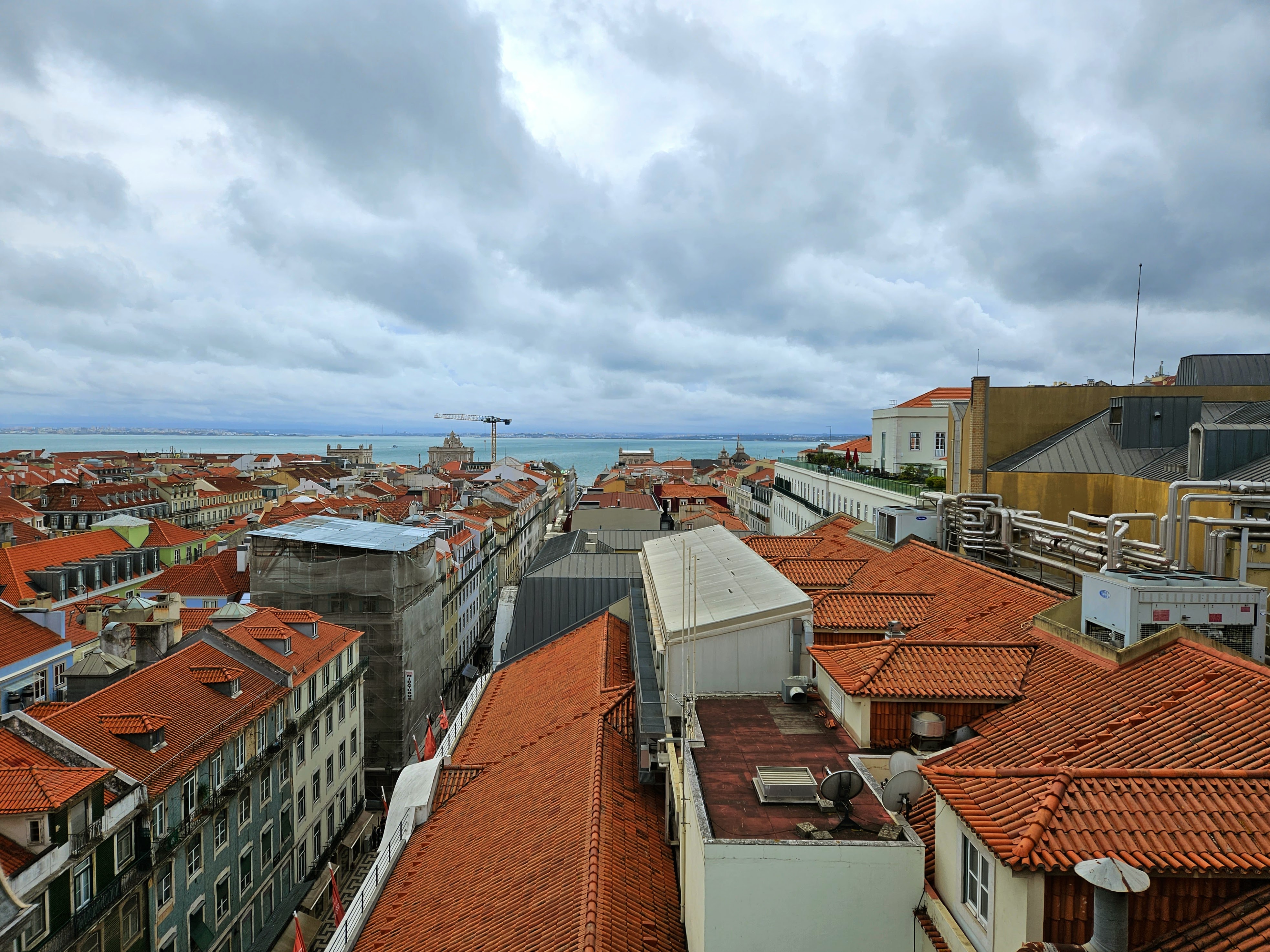
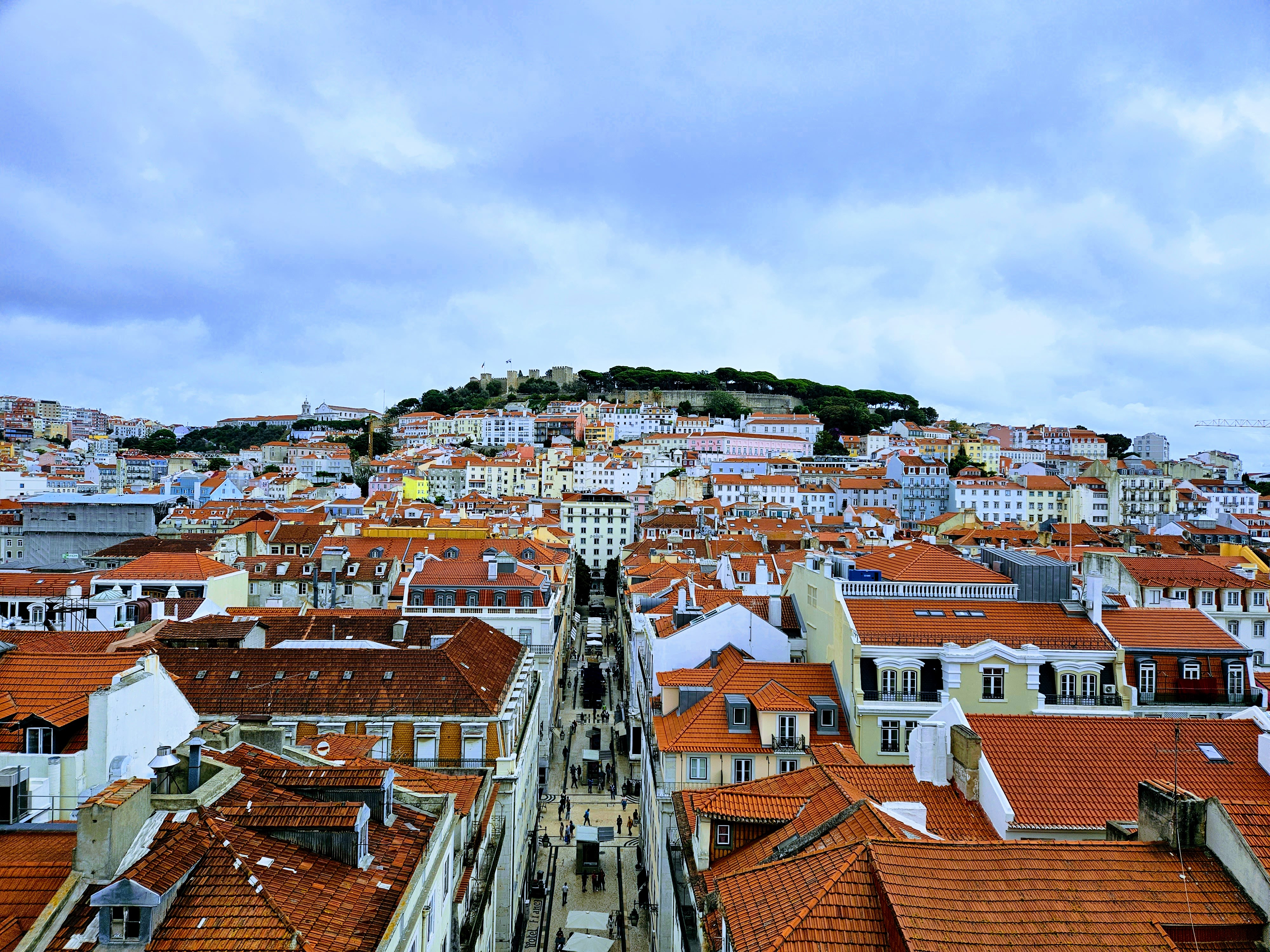

With our need for city views satiated, we thought we’d try one other touristy way to get some views around the city, Tram 28. It’s exactly what it sounds like – a tram with the number 28 on it, which may not sound like much, but Tram 28 is a specific tram that takes passengers along a route to see some cool sights in the city (it’s also functional in that, like the Santa Justa Lift, it’s part of Lisbon’s transit system, so you can also just use it as a way to get from A to B). Because this is more of a touristy thing, it’s of course usually mobbed with people, especially at stops nearest the city center, so there was quite a line when we tried to ride it. The unfortunate thing is that the tram only holds ~20 people and a new tram comes back about every ten minutes, so where there are dozens of people ahead of you (I didn’t actually count, but it was easily 100), it’s going to take…awhile. It was going to take so long, in fact, that we abandoned the idea for later in the day, so put a pin in your Tram 28 thoughts and questions for now! Instead, we did a little walk around a different part of the city center before heading to the meeting point for…our food tour! But first, a few photos.


A couple of photos of Carmo Convent, which is right next to the Santa Justa Lift and therefore very close to our hotel. We didn’t go inside, but it seemed like a cool museum option.


Yes, that’s right, we booked another food tour as we’ve found them to be a great way to not only EAT, but to also get to know the city we’re in a bit more (we’ve done them in cities like NYC and Milan in the past and really enjoyed them). And having never been to Portugal before, what better way to get to know it (and Lisbon specifically) better than by walking around learning some history, eating some food, and drinking some wine??
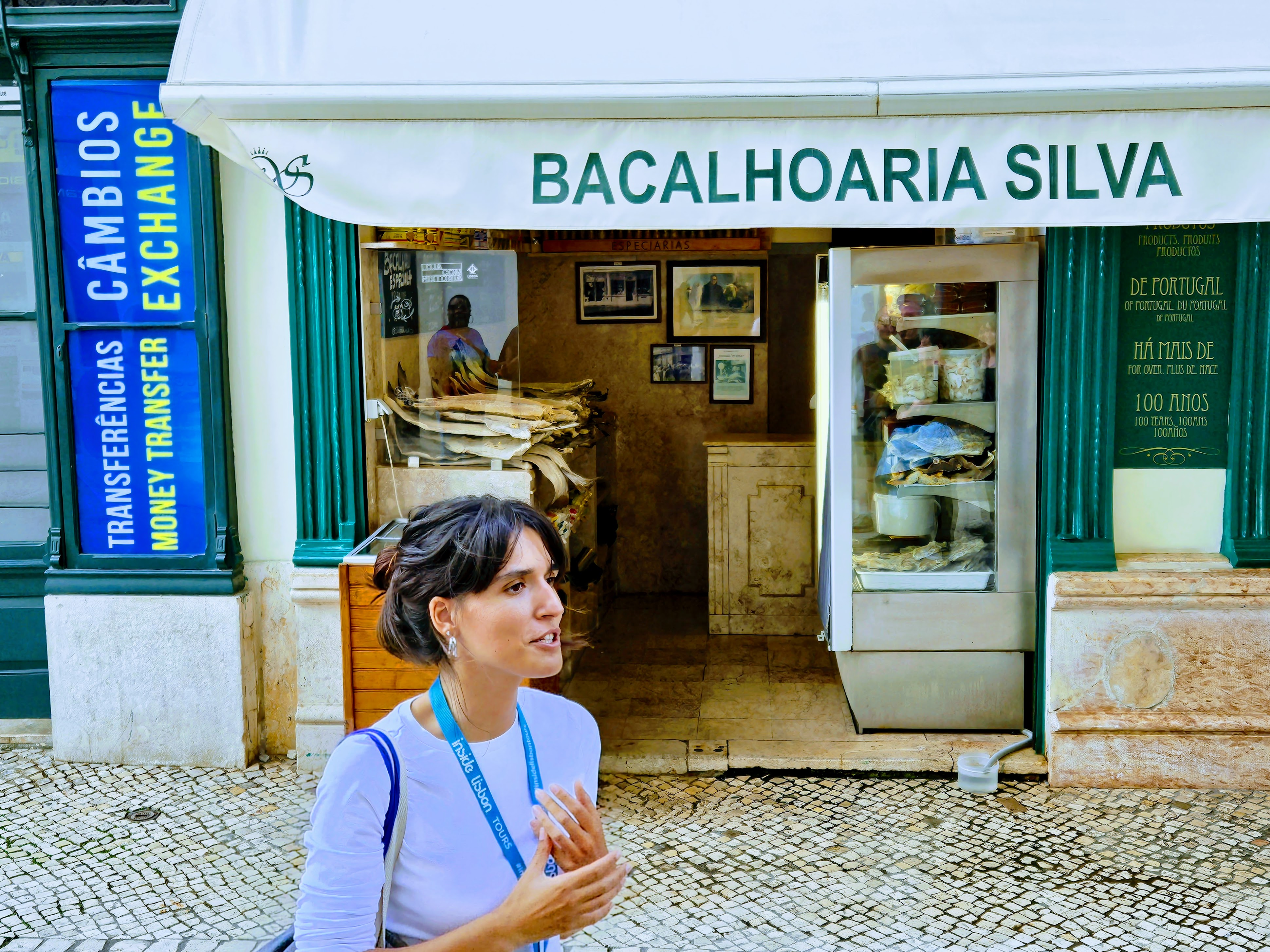
We once again used Viator to book this tour and, to be honest, after the slight escapades of our day trip this week, I was a bit nervous about what might happen this time, even though this tour didn’t involve traveling out of town and it was put on by a different tour company. I needn’t have worried though as our very friendly tour guide, Alex, was at the meeting point at the designated meeting time and she did a great job of wrangling everyone, including calling her coworker to follow up with a few folks who weren’t there by the advertised start time of 3 PM. Thankfully, everyone did end up making it just a few minutes late and we learned we had representation from Canada, Scotland, and multiple US states. Alex also confirmed this tour wouldn’t actually cover a ton of physical ground – only 700 meters total, so not even a mile! My feet can’t measure in meters, but it did feel a bit more than that (which wasn’t a problem for us at all), but it’s a three-hour tour with several stops, so for anyone who DOESN’T like walking, know that there are plenty of opportunities to rest your feet, so it’s not a physically-demanding tour. And as for the food and drink we experienced? The photos below will tell most of the story, but here are the highlights of what we ate and drank:
- Ginjinha at A Ginjinha – this is a sweet Portuguese liqueur made by infusing sour cherries with brandy, along with sugar and cinnamon. It’s a VERY sweet drink that’s meant to be sipped more like a post-dinner digestive, rather than taken as a shot. It tastes kind of like cough syrup and comes with a sour cherry or two at the end to help cut the sweetness. Once upon a time, monks prescribed it as a cough remedy. Those afflicted by such coughs were meant to drink six shots/day, so I can imagine people probably stopped coughing because they got drunk and passed out. 🙂 As for A Ginjinha, it’s said to be THE originator of the drink and the place is still run by the same family that started it (they got the recipe from the monks so they could monetize it), so you have to visit if you want to try ginjinha.
- Codfish cake and green wine at Casa do Alentejo – according to Alex, codfish cakes are often given to children because many kids don’t like the taste of seafood. But there’s so much seafood here, especially cod, that parents still feed it to kids, but in this case it’s mixed with potatoes and seasonings and then fried to make it more palatable. I myself do not love seafood either (at least not anything too “fishy”) and I thought our small serving (like a croqueta) was pretty good! As for the green wine, first of all, it’s not actually green, but rather it’s a white wine made from young grapes, so the “green” name comes from that early picking/fermenting/bottling process. Second of all, it’s kind of like champagne in that it’s a bit bubbly. I’m not a connoisseur of any wines, so I’m a bad person to ask, but I thought it was okay. Lighter and fruitier as compared to heavy and dry.
- Sheep’s cheese and port at Caneca de Prata – although we sat for a bit at this restaurant, we only ate some small slices of cheese made from sheep’s milk. It was pretty creamy and not stinky, which was a plus in our books! Kind of like mozzarella, if you like that. We also had some port at this stop, which is pretty sweet and has a high alcohol content, so you can get easily drunk on it. Again, I’m not a big fan of any wine, so it wasn’t my fave.
- Bifana at As Bifanas do Afonso – bifana translates as “beef-pork” sandwich, which doesn’t make any sense, especially as the meat is just pork. The meat is sliced kind of like a pot roast or thicker roast beef sandwich would be and you’re encouraged to eat it with either mustard or spicy piri-piri sauce (or maybe both!). Scott went for mustard while I went for piri-piri, but both were good options (I don’t like mustard, so my vote is for the piri-piri sauce).
- Portuguese tapas and red wine at Maria Palato – we had a selection of “typical” tapas here, including sliced sardine on bread, two kinds of sausage, and two kinds of cheese, all from different parts of Portugal. I was worried the sardine would be really fishy and it kind of was, but it wasn’t terrible. It actually tasted mostly like tuna, so if you like that, you’ll probably like this. I didn’t take good notes on the sausages or cheeses, but they were good! In the pantheon of wines, red is my least favorite (usually far too dry for me), so I also didn’t take good notes on that. 🙂
Hopefully that was a descriptive enough summary! Check out the photos below for the rest of the story.


Alex explaining ginjinha to us, along with my shot of it. As she said though, it’s really meant to be sipped!

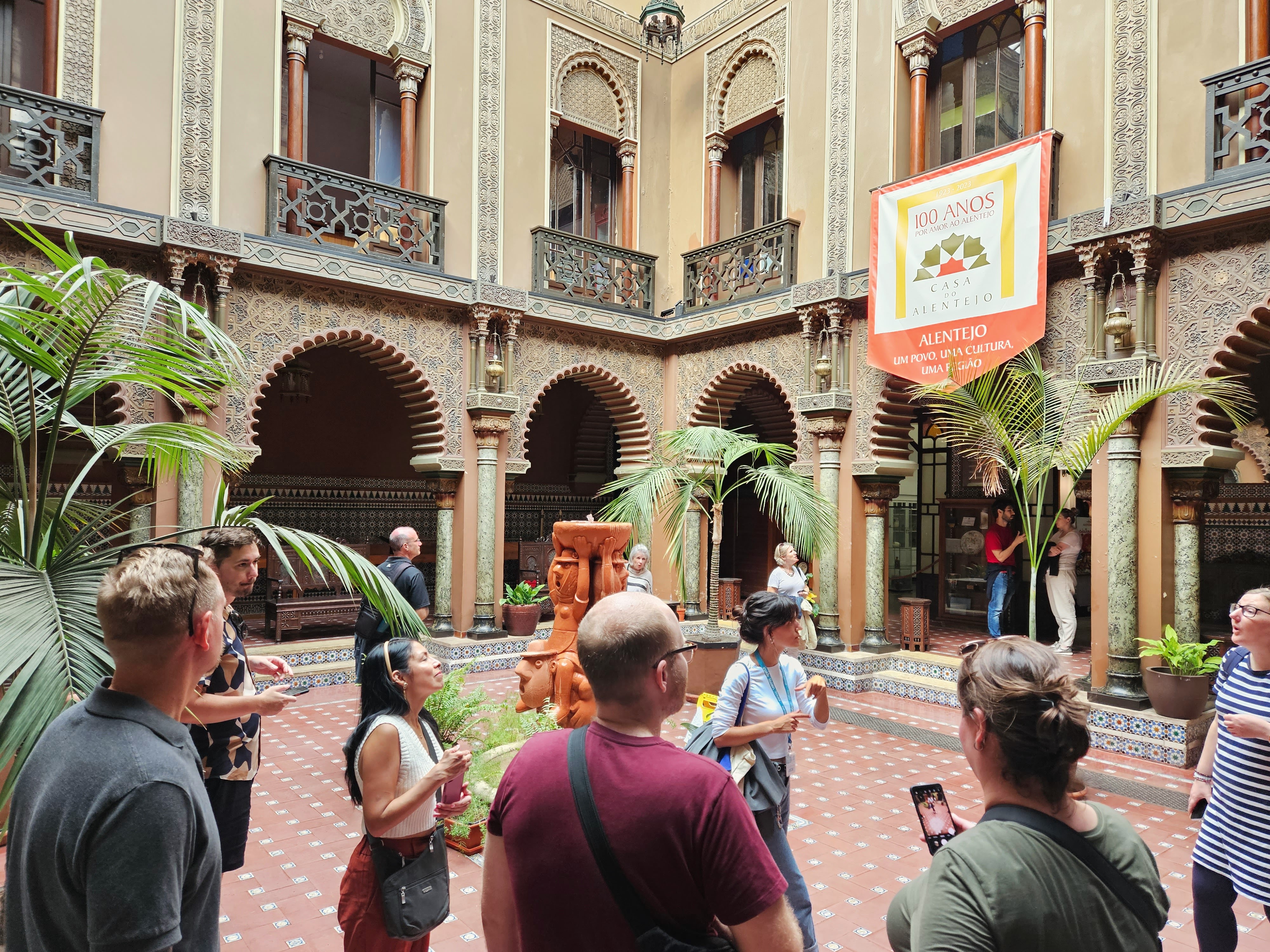

These photos are all from our second stop, Casa do Alentejo, which has previously been a casino. As you can see from the first photo, it looks very plain outside, but is quite interesting inside, so Alex wanted us to see that.


The food is what you’re really here for though, so here’s the codfish cake and green wine from our second stop.


Sheep’s milk cheese and port at our third stop!


Lots of folks lined up for bifana at our fourth stop! Alex said it has become a very popular place, thanks mostly to TikTokers, so there’s usually a long line (Scott and I had walked by the previous day and seen a long line, but didn’t know why). I opted to not have a beer (not a fan of it), instead choosing the Portuguese version of Fanta. It didn’t seem to be carbonated and tasted more like juice than soda.


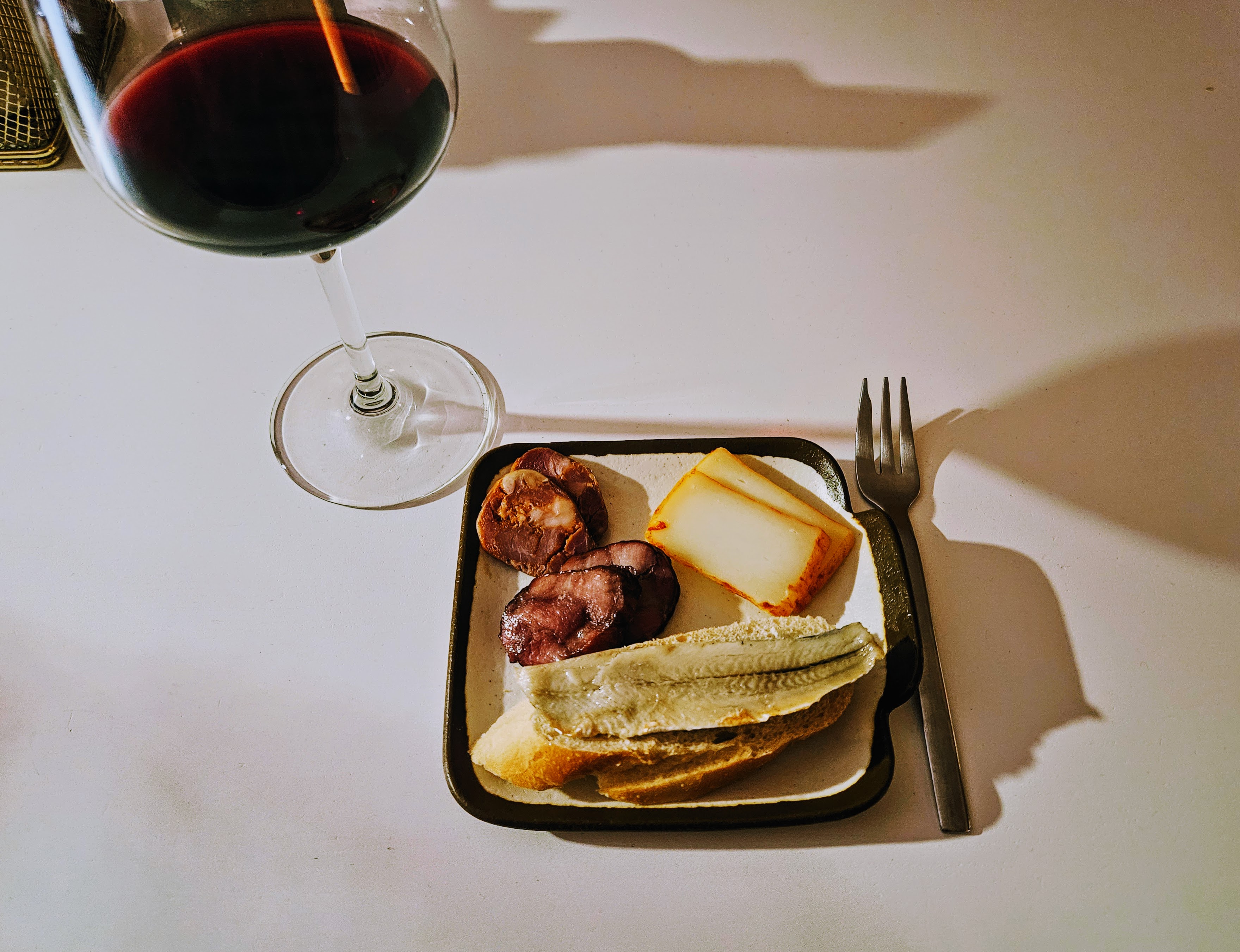
Our final stop, where we had an upstairs table to ourselves and a server who explained more about what we would be eating and drinking. A nice end to a fun, informative, and tasty tour!
We found this food tour to be really good! We paid $125 total for both of us, which felt very reasonable to us, given everything we ate/drank, the quality of the guide, and honestly, the vibes of this particular group. We had good conversations with several folks on the tour with us (there were 12 total, which was a good size), which helped the overall experience be that much more fun! In terms of the AMOUNT of food we ate, it didn’t feel overwhelming or too filling. We didn’t eat another meal that night, but I could see where you may want to eat again a few hours later, depending on what time of day you go (our tour started at 3 PM). We’ll certainly do more of these tours in the future. 🙂
Post-tour, we went back to the same stop for Tram 28 and proceeded to…wait. Although the line was shorter than it had been earlier in the day, we still had to wait awhile before we could actually get on. Five trams came and went and the line got shorter each time, but we ultimately got on the sixth one (we likely could have snuck on the fifth, but we would have been standing the entire time, so we opted to let someone go ahead of us so we could have our choice of seats). Even though it was dark by the time we were riding the rails, it was still a neat experience, mostly because it’s a novelty to ride a streetcar. We weren’t entirely sure if we would loop back to the beginning, but it seemed likely because we could see that each Tram 28 that came to our stop first stopped a short distance before the stop to let a bunch of people off, so every tram that actually came to us was empty. Unfortunately, ours terminated at a different stop (not sure which one as I don’t know them all!) in an unfamiliar part of the city, so we just caught an Uber back to the hotel. We weren’t far, so it cost us a whopping €7, but we did hear another passenger say they were 45 minutes from their hotel, which is a bummer. Keep that in mind if you’re going to take Tram 28! Maybe ask the driver when you board where it’s going to terminate?
There weren’t many things to take photos of on our ride, but of course I still took some.


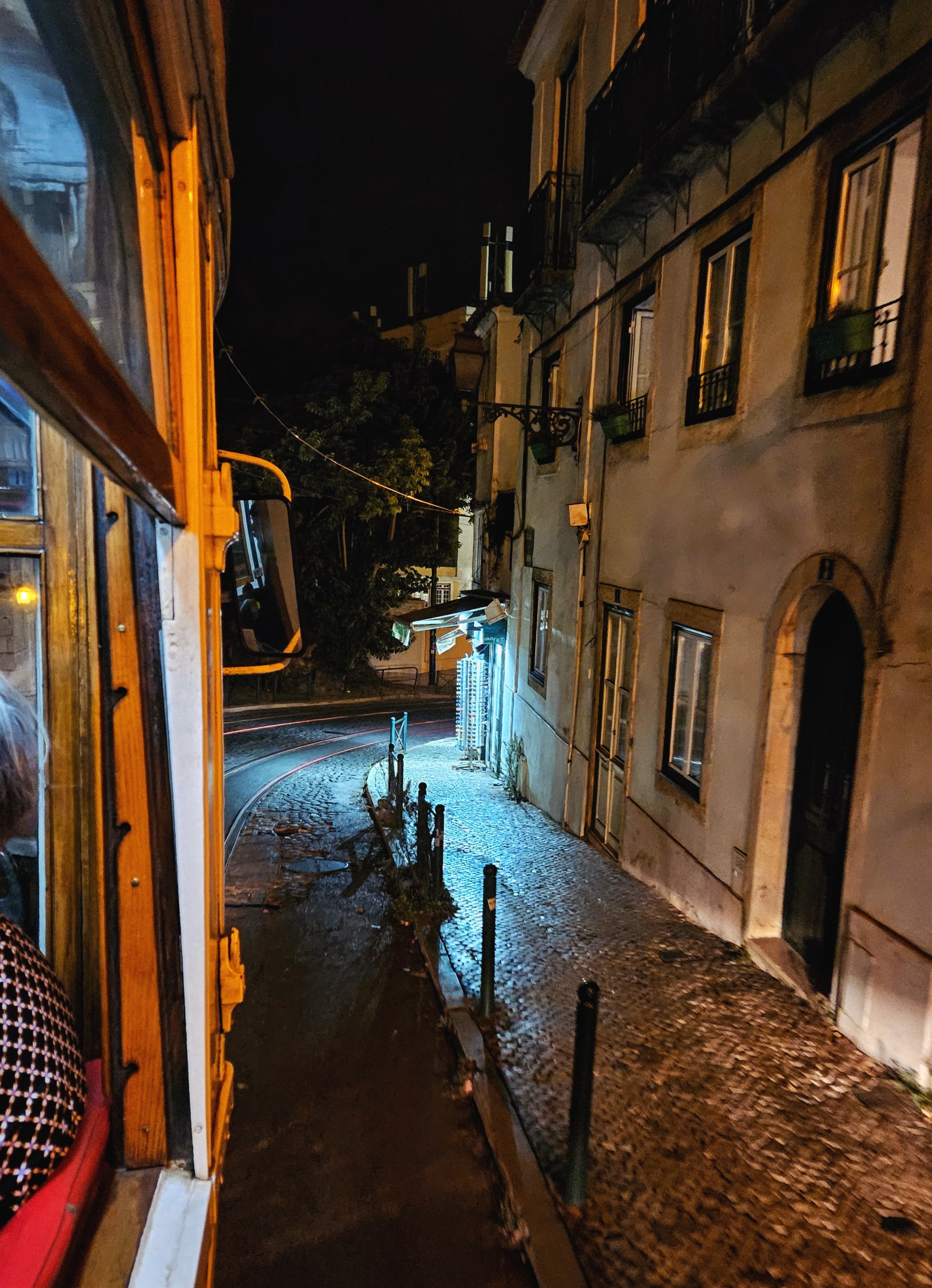
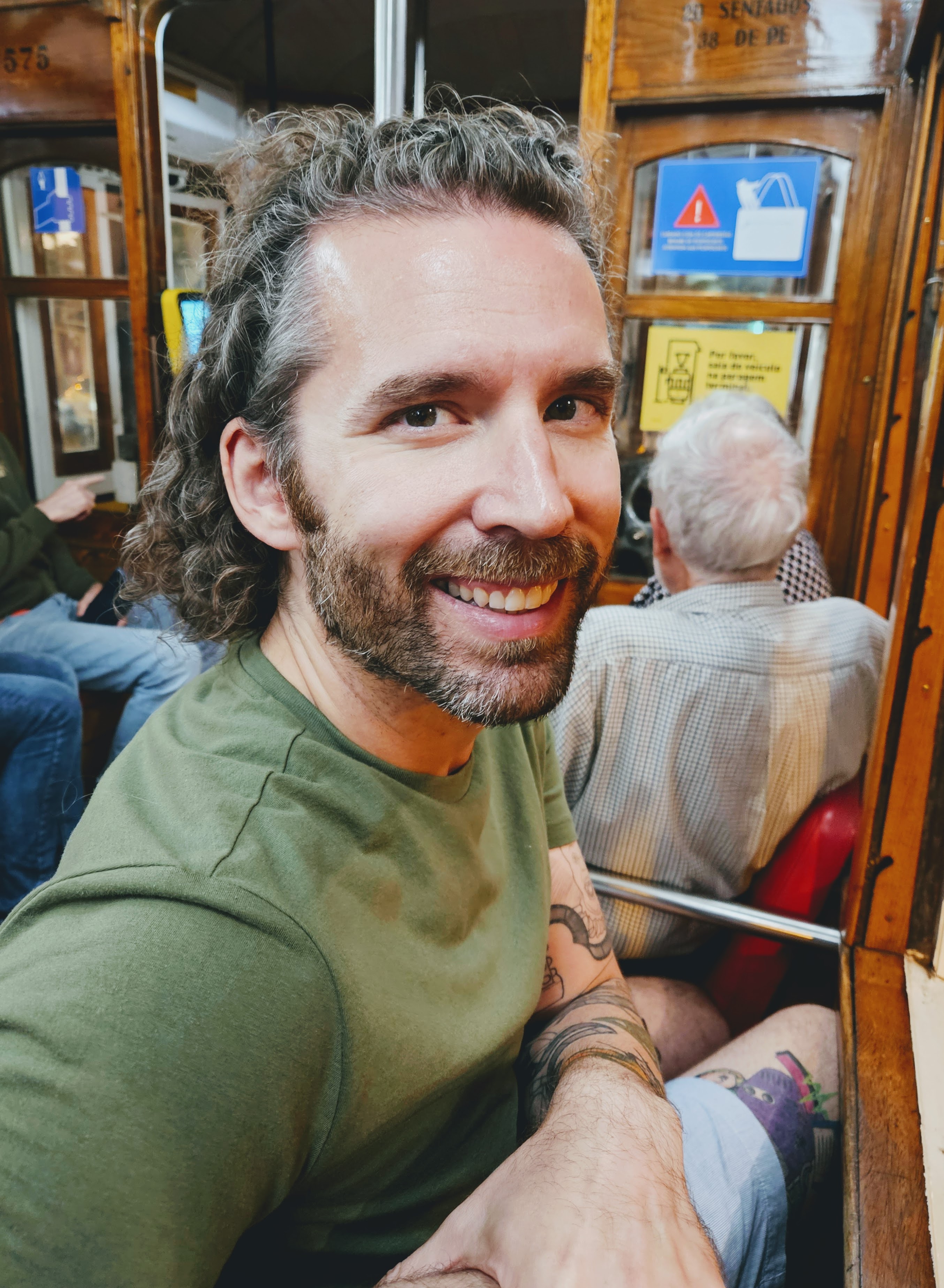
I did take the photo on the left so you could see what it looks like to ride from the window. And of course I also got a photo of myself, though Scott took this one, so it wasn’t technically a selfie!

Even though we didn’t SEE much on Tram 28, it was a fun experience. I think it’s worth doing when you’re in Lisbon, especially if you’re already getting a transit card, since the cost is included in that (you just validate/tap your card on a reader in the tram). To avoid crowds, plan on going earlier in the day, like before 9 AM. A good morning activity that takes 48 minutes to go from the first to the last stop!
The rest of our evening was spent packing up our stuff for the next day’s train journey to Porto, followed by another stop at Sidebar for a couple of drinks. I mean, when in Rome (or Lisbon), right?? 🙂 We had some fun conversations with folks outside the bar (since the bar is so small, most everyone stands outside with their drinks), so that felt like a perfect way to cap off our time in Lisbon. Next up, Porto!

 That One Guy Who Travels